
This post contains affiliate links. As an Amazon Associate we earn from qualifying purchases, at no extra cost to you.
Understanding the Challenge of Cat Furniture for Renters
Renting an apartment comes with a unique set of restrictions, especially when it comes to modifying the space. For cat owners, installing traditional cat furniture often means drilling into walls or ceilings — a definite no-go for most rental agreements. Small apartments add another layer of complexity: limited floor space means you need furniture that’s not only renter-friendly but also compact and multifunctional.
Key Features to Look for in No-Drill Cat Furniture
When shopping for cat furniture ideal for renters in small spaces, keep these features in mind:
- No-drill mounting options: Look for furniture that uses tension rods, adhesive strips, or freestanding designs rather than permanent fixtures. These methods avoid damaging walls or ceilings and are usually easy to remove when you move.
- Vertical space utilization: Since floor space is limited, choose furniture that takes advantage of vertical areas. Cat trees with compact footprints but multiple levels, window-mounted perches, and wall shelves with strong adhesive or tension mounts can provide climbing and lounging spots without cluttering the floor.
- Multi-purpose designs: In small apartments, furniture that combines cat functions with human use is a huge plus. For example, cat loungers that double as side tables or shelves that serve as storage and play areas.
- Lightweight, portable construction: Renters may have to move frequently, so furniture should be easy to relocate or store. Avoid bulky or heavy pieces that are difficult to manage.
- Non-damaging materials: Surfaces that don’t damage walls or furniture and that won’t leave residue or holes after removal are important in rental settings.
No-Drill Cat Furniture Types for Renters with Small Apartments
Freestanding Cat Trees with Small Footprints
Traditional cat trees usually require significant floor space and can be bulky. However, many modern designs are minimalist and freestanding, providing climbing, scratching, and resting areas vertically without needing to be secured to walls. Choose models with a small base and multiple perches to maximize vertical space without overwhelming your apartment.
Tension Rod Mounted Cat Shelves and Perches
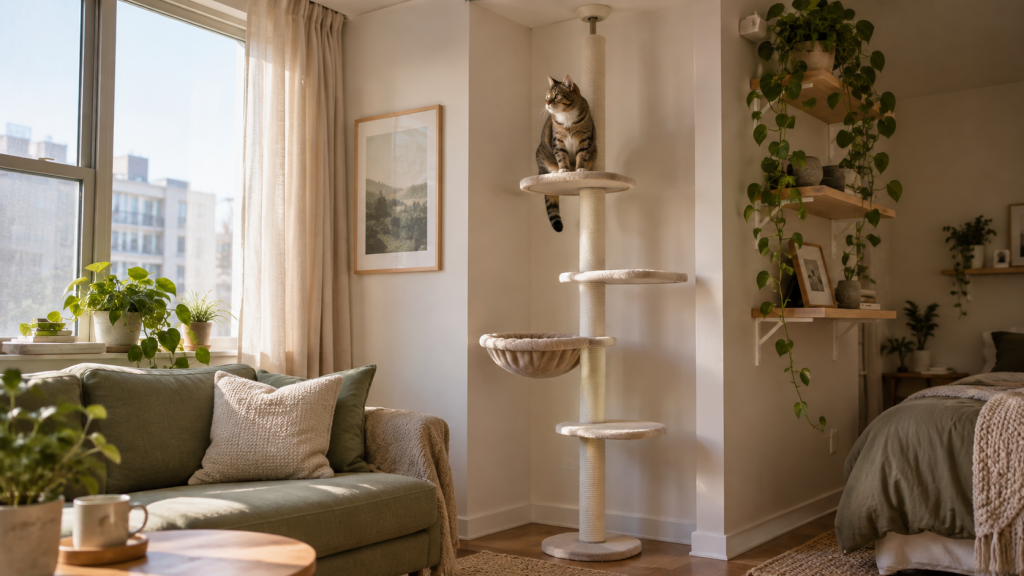
Tension rod-mounted furniture uses adjustable poles that wedge between floor and ceiling, offering a sturdy framework for attaching cat shelves or hammocks. These systems don’t require drilling, are easy to install, and can be adjusted to suit ceiling heights. They provide vertical climbing structures and hide-away spots without permanent fixtures.
Window-Mounted Cat Perches
Windows are often an underused resource in small apartments that can double as prime real estate for cats. Suction-cup or clamp-based window perches allow cats to sunbathe and bird-watch without taking up any floor space. Because they rely on suction or clamps rather than hardware, they are renter-friendly and easy to remove.
Adhesive or Command Strip Mounted Wall Shelves
Wall shelves specifically designed for cats can be mounted using strong adhesives or removable wall hooks that don’t damage paint or drywall. These shelves can create a series of steps or platforms for your cat to climb and explore. Make sure to choose shelves rated for the weight of your cat and install according to manufacturer instructions for safety.
Multi-Functional Furniture
Items that combine cat furniture with household furniture save space and money. Examples include:
- Side tables with built-in cat cubbies
- Bookshelves with integrated cat climbing paths
- Ottomans or benches with concealed cat beds
These options reduce clutter by blending pet and human furniture into one piece, ideal for small rentals.
Tips for Making Cat Furniture Work in Small Apartments
- Measure your space: Knowing your limited floor area and ceiling height will guide your choices. Opt for narrow bases and tall structures.
- Use corners and vertical edges: Corners are often wasted space but can be perfect for corner cat stands or shelves, making your layout more efficient.
- Layer different levels: Create a climbing path using a combination of shelves, trees, and perches to give your cat variety without encroaching on valuable living space.
- Consider temporary or portable options: Furniture that can be quickly disassembled and moved benefits renters who may transition frequently.
- Protect your walls and floors: Use protective pads or mats beneath freestanding furniture to avoid scratches or dents.
Frequently Asked Questions
Can I safely use adhesive-mounted shelves for my cat?
Yes, but it depends on the quality of the adhesive and the weight of your cat. Choose shelves designed specifically for cats that come with strong removable adhesives or hooks. Always follow installation guidelines, test the stability before use, and avoid overloading the shelves.
Are tension rod cat trees sturdy enough?
Tension rod cat trees can be very sturdy if installed correctly. The key is to ensure the rods are tightly secured between floor and ceiling and that the structure is balanced. They offer a great no-drill option for renters, especially when vertical space is a premium.
What is the best way to maximize space with cat furniture in a small apartment?
Focus on vertical space and multipurpose furniture. Combine wall-mounted shelves, window perches, and compact freestanding trees. Use corners and consider furniture that serves dual functions, like a cat climber integrated into a bookshelf.
Are there any risks with suction-cup window perches?
Suction cups can lose grip over time, especially if windows are cleaned frequently or the perch is overloaded. To minimize risks, regularly check the suction cups, clean the window surfaces properly before installation, and choose products with high-quality suction designs rated for your cat’s weight.