
This post contains affiliate links. As an Amazon Associate we earn from qualifying purchases, at no extra cost to you.
Why a Cat Scratching Post Matters in Small Apartments
Living in a small apartment means every inch of your space matters, and that includes the areas your cat uses. A cat scratching post is essential to keep your feline friend entertained and to protect your furniture from claw damage. However, traditional scratching posts can be bulky and take up valuable floor space. That’s why finding a compact cat scratching post designed specifically for small spaces is key.
Getting the right scratching post for a small apartment prevents clutter while giving your cat an appropriate outlet to satisfy their scratching instincts. This article breaks down what to look for in a cat scratching post small space residents will appreciate.
Key Features to Look for in a Cat Scratching Post Small Space Edition
1. Compact Footprint
The first priority is the size of the scratching post. A bulky post might encourage scratching, but if it dominates your living area, it’s not practical. Look for posts with a narrow base that fit snugly into corners or along walls without protruding into walkways. Some models are designed vertically to make better use of height instead of width in tiny apartments.
2. Multi-Functionality
Space-saving is about maximizing every item’s use. Opt for scratching posts that double as something else. For example:
- Scratching posts combined with a cat bed or perch on top
- Posts that include storage compartments or hiding spots underneath
- Posts with attached hanging toys to entertain without extra clutter
These options help reduce the number of separate cat products you need.
3. Stable Construction
Even a small scratching post must be sturdy. Cats can get pretty vigorous when scratching. Choose materials like solid wood or reinforced composites and stable bases. Posts that wobble or topple easily won’t hold up, even in small spaces that demand dense, well-used items.
4. Suitable Scratching Material
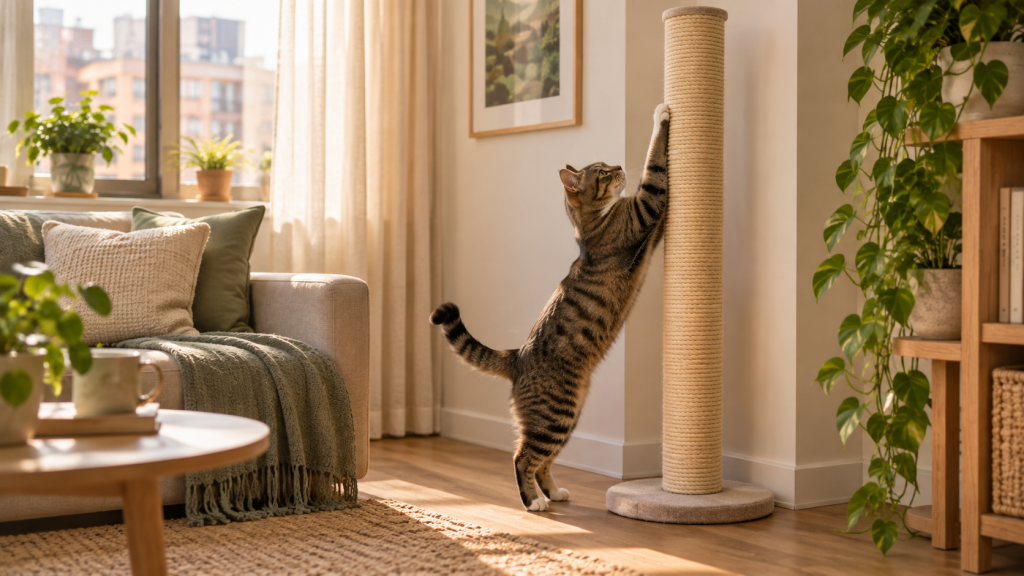
Carpet and plastic are usually less appealing to cats, and can wear out quickly. Sisal rope or natural fiber covers are the preferred materials because they are durable and satisfying to claw. Some small-space posts feature sisal on vertical poles, providing an instinctive, rough texture that lasts.
5. Vertical vs. Horizontal Options
Vertical scratching posts take advantage of vertical space, freeing up floor area. This is typically the best choice for small apartments. However, some cats prefer horizontal surfaces to stretch out as they scratch. For apartments under 500 square feet, a compact vertical post generally works better, but if your cat prefers horizontal scratching and you have limited space, look for a narrow, low-profile horizontal scratcher, such as a thin mat or slat.
Placement Tips for Cat Scratching Posts in Small Apartments
Utilize Corners and Narrow Spaces
Corners are often underused in small apartments. A tall, slender scratching post fits well into a corner without inching into main living areas. Narrow gaps between furniture and walls can also accommodate slim posts.
Near Favorite Lounging Spots
Cats love to stretch and scratch after napping. Placing a scratching post next to your cat’s bed or favorite resting spot encourages use and prevents scratching of nearby furniture.
Avoid Blocking Walkways
In small apartments, every pathway matters. Make sure the scratching post doesn’t obstruct daily movements or create tripping hazards, especially in tight hallways or room entrances.
Alternative Scratching Solutions for Small Space Living
If floor space is exceptionally tight, consider alternative scratching options tailored to micro-living environments.
Wall-Mounted Scratchers
These take zero floor space and screw directly into walls. Cats can stretch upwards and scratch vertically without a bulky post. Make sure your walls can handle the installation and choose sisal-covered wall mounts for durability.
Doorframe Scratchers
Scratchers that clip or adhere to doorframes are another no-floor-space option. They provide vertical scratching areas in spots your cat will pass daily.
Portable Scratch Pads
Flat scratch pads or mats can be tucked under furniture or slid out when needed. Some fold or roll up for easy storage.
Cleaning and Maintenance for Small Apartments
Small apartments often mean limited cleaning time and areas. Choose posts with materials that are easy to wipe down or vacuum. Avoid fabric covers that trap fur or odors. Regularly trim your cat’s nails and rotate scratching surfaces to keep them fresh and appealing, reducing the likelihood your cat will turn to your walls or furniture.
Frequently Asked Questions
Q: What size scratching post is best for small apartments?
A: Look for posts under 18 inches wide with a height between 20–30 inches. Taller posts maximize vertical space, and smaller bases keep them unobtrusive.
Q: Can I make a DIY cat scratching post suited for small spaces?
A: Yes, you can create a vertical scratcher using a piece of plywood covered in sisal rope mounted on a narrow wooden board. This DIY project allows you to customize size and shape to fit your apartment exactly.
Q: How do I encourage my cat to use a new scratching post in a small apartment?
A: Place the scratching post near their favorite spots, use catnip to attract them, and reward scratching behavior with treats or praise to reinforce positive use.
Q: Are wall-mounted scratching posts effective for small spaces?
A: Yes, wall-mounted posts are an excellent space-saving option. They provide vertical scratch surfaces without using floor space, which is ideal in small apartments.
Conclusion
Selecting the right cat scratching post for a small space apartment requires balancing your cat’s natural instincts with your limited living area. Focus on compact, vertical designs made from durable materials like sisal, and consider multi-functional or wall-mounted options. Thoughtful placement in corners or near your cat’s favorite spots increases usage and keeps your apartment clutter-free.
By using these guidelines, you can keep your cat happy and your small apartment organized without sacrificing functionality.