
This post contains affiliate links. As an Amazon Associate we earn from qualifying purchases, at no extra cost to you.
Why You Need a Litter Mat for Tracking in a Small Apartment
If you live in a small apartment, every inch of floor space matters—especially when it comes to managing your cat’s litter area. Cats tend to track litter outside their box, which can quickly turn a tiny living space into a constant mess. A good litter mat is essential for capturing litter granules before they spread all over your floors, making cleaning easier and helping maintain a cleaner, more comfortable living space.
In a small apartment, you likely don’t have the luxury of setting the litter box in a large dedicated room or laundry area. The litter mat, then, needs to not only be effective but also space-efficient and easy to clean.
What to Look for in the Best Litter Mat for Tracking in Limited Spaces
Size and Shape
Because space is limited, finding a mat that fits well under or around your litter box without taking up too much room is critical. Oversized mats can waste space and make the area feel crowded.
Look for mats that:
- Are just slightly larger than your litter box footprint to catch stray litter without crowding your living area
- Have a slim profile so they fit neatly under the box or alongside it without causing a trip hazard
- Offer shapes such as rectangular, L-shaped, or half-moon that can be customized to your apartment’s layout
Material and Texture
The right material can dramatically reduce tracking. Good litter mats trap litter particles without allowing them to scatter further.
Effective materials include:
- Rubber or silicone mats with raised grips: These catch litter between the ridges and are easy to shake or vacuum clean
- Double-layer mats: Some mats feature a top layer designed to catch litter and a bottom layer with a soft texture that traps granules, preventing them from falling on the floor
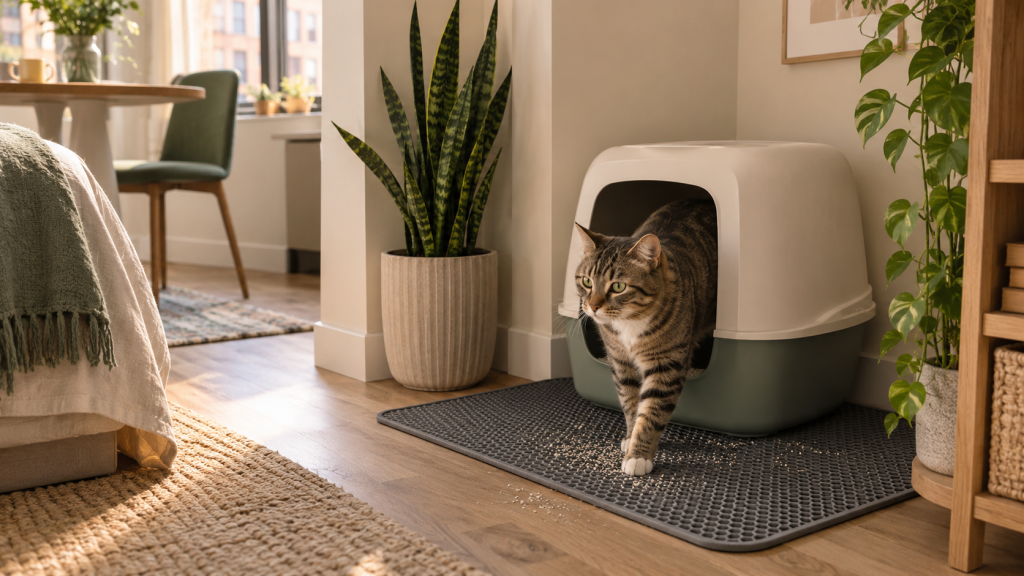
- Mesh or honeycomb designs: These allow litter to fall through holes and be trapped underneath, so it doesn’t scatter further
For small spaces, mats that are waterproof, non-slip, and stain-resistant are preferred as they allow for hassle-free cleaning, which you’ll appreciate when space and time are tight.
Cleaning and Maintenance
In a small apartment, ease of cleaning can be a game changer. Choose litter mats that:
- Can be easily shaken out over a trash bin or vacuumed
- Are washable either by hand or in a washing machine
- Resist stains and odors to keep your apartment smelling fresh and looking clean
Quick and simple maintenance ensures the mat doesn’t become just another clutter item that you avoid, defeating its purpose.
Portability and Storage
If you have a multi-use room or periodically rearrange your space (common in small apartments), you might want a mat you can quickly fold, roll up, or stow away when not in use.
Look for mats that:
- Are lightweight but durable
- Can be rolled or folded without damage
- Come with an easy grip or handle for moving them
Tips for Setting Up a Litter Station in a Small Apartment
Clear a Dedicated Nook
Even a tiny corner that’s somewhat secluded will keep litter mess contained. Place the litter box with the chosen mat in this space, ideally near a wall or behind a door to create a barrier against tracers.
Avoid Wall-to-Wall Coverage
Don’t feel like you need an oversized mat that covers the entire floor around the box. This is counterproductive in a small space and can result in extra cleaning. Instead, choose a well-designed mat sized just right to catch stray litter from the box entrance.
Combine with Storage Solutions
Small apartments benefit from integrated solutions. Look for mats that can slide under or next to compact storage bins or litter box furniture. You might use vertical shelving nearby for litter supplies, freeing more floor space.
Consider Your Cat’s Habits
If your cat tends to “kick” litter out when exiting the box, go for mats with deeper ridges or honeycomb styles that trap more granules. If your cat has a lighter step, a softer mat may suffice.
Frequently Asked Questions
How do I choose a litter mat that doesn’t attract static and make tracking worse?
Static can cause litter granules to cling to your cat’s paws and the mat itself. Opt for mats made from rubber or silicone materials, as these are generally less prone to static than some fabrics or microfiber mats.
Is it better to have a larger mat or a smaller mat in a tight apartment?
A mat that is too large can eat up precious floor space and might be inconvenient, while a mat that’s too small won’t effectively catch tracking litter. Aim for a mat that extends a few inches beyond the litter box perimeter, particularly on the exit side, to catch most tracked litter without overwhelming the area.
Can I make my own litter mat that suits a small space?
Yes. Some cat owners customize doormats or use rubber-backed bath mats trimmed to size as affordable alternatives. Just ensure that the surface texture effectively traps litter and is easy to clean.
How often should I clean or replace the litter mat?
In a small apartment, regular cleaning is crucial to prevent odors and litter buildup. Clean your litter mat at least once a week or whenever you notice litter accumulation. Replace the mat every 6-12 months depending on wear and odor retention.
Bottom Line
In a small apartment, finding the best litter mat for tracking means balancing efficient litter capture with space-conscious design. Focus on mats sized appropriately for your box, made with effective litter-trapping materials like rubber or double-layer honeycomb textures, and easy to clean and maintain. With the right mat, you can keep your limited space cleaner and more comfortable for both you and your cat.